
Counter Top, Under Counter & Wall Mounted Washbasins: Which Is Right for Your Bathroom?
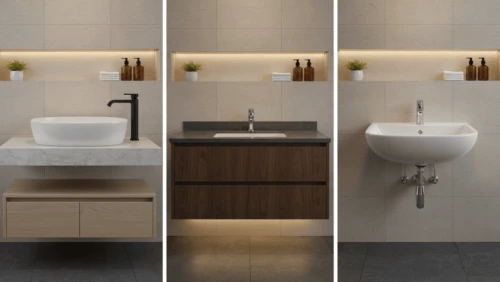
Your washbasin choice isn't just aesthetic - it determines how your counter works, how the space cleans, and how well the whole bathroom fits together. The three main configurations in modern Indian bathrooms are counter top, under counter, and wall mounted - and while they can look similar in a showroom, they behave very differently once installed.
Here's a clear comparison so you can choose with confidence.
What Is a Counter Top Wash Basin?
A counter top wash basin - also called a table top or vessel basin - sits entirely on top of the vanity or counter surface. The full bowl rises above the counter, visible and sculptural, with the waste pipe running through a single opening below. Installation is the simplest of the three types: set the basin, seal the waste connection, done.
This format has grown significantly in premium Indian bathrooms because it lets the basin itself become the focal point of the space. Unlike formats that integrate into the counter, a counter top basin is deliberately presented. This is why it pairs naturally with open-shelf vanities, floating furniture, and minimal interiors where each element is meant to be noticed.
Key specs worth knowing:
- Bowl height above counter: 15–20 cm (6–8 in) depending on the basin design
- Counter depth required: 50–60 cm (20–24 in) - the basin must sit fully within the counter area
- Tap placement: Wall-mounted faucet is the standard pairing; in-basin taps are not possible with a counter top format
One practical consideration: because the bowl sits proud of the surface, counter space around it is partially occupied. If you need the full counter for daily toiletries, the under counter format is more functional.
Kerovit's Art Basin in the Aurum collection is the premium expression of this format - sculptural forms with PVD-finish hardware in gold, rose gold, and matte black to match.
What Is an Under Counter Wash Basin?
An under counter basin is mounted from below the counter surface. The counter - whether stone, quartz, or solid surface - flows uninterrupted from edge to edge, with no visible basin rim above it. The basin is fixed with a support ring or clamp from underneath, and the counter itself forms the visible edge around the opening.
The result is the most seamless of the three formats. There's no ridge at the counter edge to collect soap or water, and wiping the counter clean means wiping directly into the basin. It's particularly well-suited to bathroom counters that see heavy daily use.
Key specs:
- Counter depth required: 55–65 cm (22–26 in) for full support
- Standard counter height (India): 800–850 mm (32–33 in) from floor to rim
- Installation note: The counter cutout must be precise, and the joint between basin and counter underside must be properly waterproofed - professional installation is non-negotiable here
This format requires a vanity cabinet or counter unit to be specified from the start. For full renovations where a vanity is already planned, it's the most practical premium choice for a storage-rich bathroom. Retrofitting is more involved, since you need an existing counter or need to build one.
What Is a Wall Mounted Washbasin?
A wall mounted washbasin is fixed directly to the bathroom wall - no vanity, no counter, no pedestal. The basin hangs from the wall, the floor beneath is completely clear, and the waste trap is either concealed inside the wall or covered by a half pedestal housing in retrofit situations.
Key specs:
- Standard installation height: 800–850 mm (32–33 in) from floor to basin rim - but adjustable since there's no fixed counter
- Wall requirement: Load-bearing wall or reinforced stud framing - always verify before purchase
- Floor clearance: 100% - the entire floor below the basin is open
The space advantage is the most significant of the three types. In bathrooms under 40 sq ft (3.7 sq m), a wall mounted basin with floor clearance makes the room feel meaningfully larger - both visually and functionally, since the floor is fully accessible for cleaning.
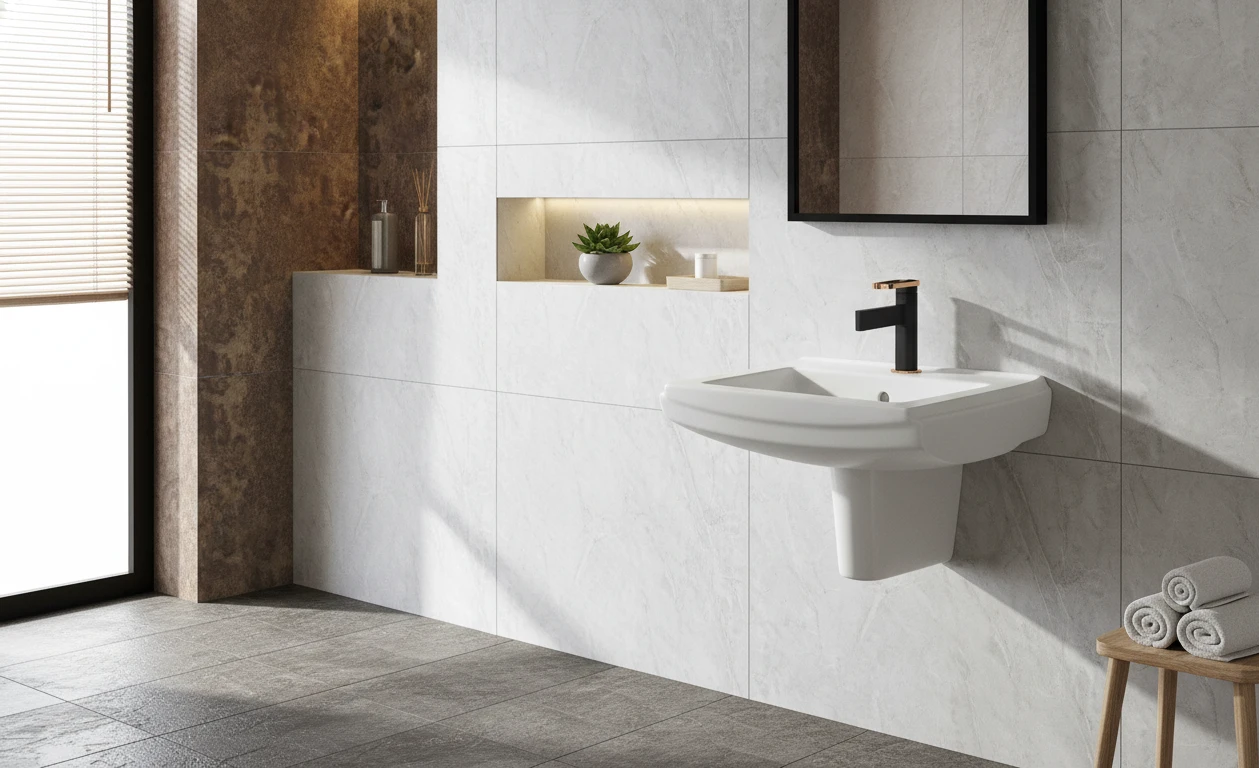
The half pedestal variant sits in a practical middle ground: the basin is wall-supported (like a full wall mounted basin), but a partial ceramic housing below covers the waste trap and supply connections. It's the most practical choice when you want the wall-hung look without the complexity of in-wall pipe concealment - and is ideal for retrofit projects where the wall supply and waste pipes are already in position.
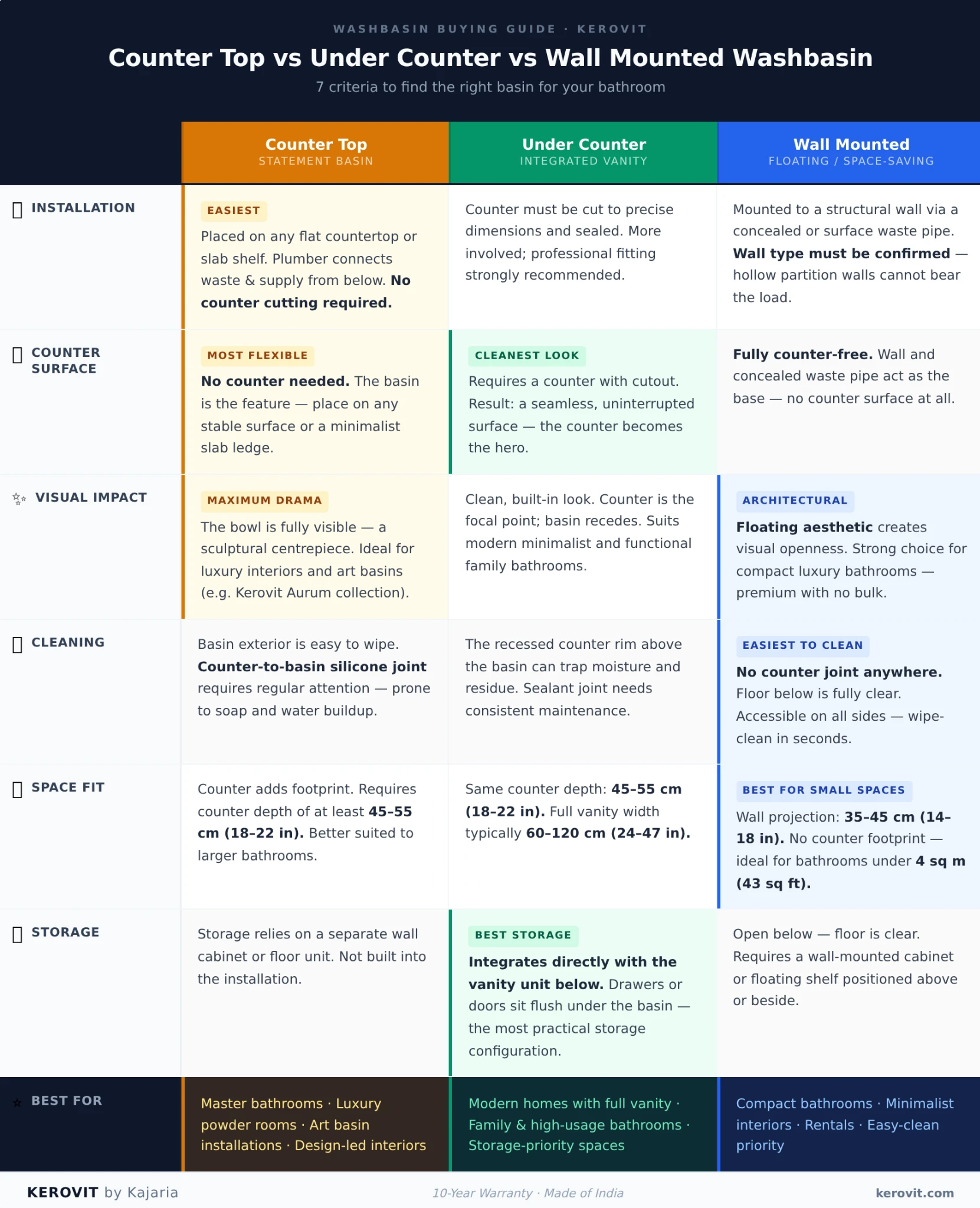
Counter Top vs Under Counter vs Wall Mounted: Side-by-Side Comparison
Counter top, under counter, and wall mounted washbasins differ on installation, cleaning, storage, and how they use space - the comparison below covers all three across seven criteria.
How to Choose the Right Washbasin for Your Bathroom
The answer comes from matching the format to how your bathroom is built - not just how it looks on a mood board.
Choose a counter top basin when:
- You're installing a floating or open-shelf vanity where the basin can be presented
- The bathroom is a master or en-suite where design quality is a priority
- You're specifying Kerovit's Art Basin range and want the sculptural form to take centre stage
Choose an under counter basin when:
- You're doing a full renovation with a vanity cabinet already specified
- Counter storage and a clean, uninterrupted surface are both priorities
- The bathroom has a family or everyday-use profile where the counter works hard
Choose a wall mounted basin when:
- The bathroom is under 40 sq ft (3.7 sq m) and every square foot matters
- You want the most minimal, modern look with no furniture footprint
- The wall structure can support a fixed bracket - always confirm this before purchasing
When a half pedestal makes more sense: If you're replacing an existing basin and the supply pipes are exposed at the wall, a half pedestal basin covers those connections without requiring wall work or a new vanity unit. It delivers the wall-supported look in a retrofit without additional construction.
Space & Installation: What to Plan Before You Buy
One dimension that affects all three types: the counter height. Standard Indian bathroom counter height runs 800–850 mm (32–33 in) from floor to rim - slightly lower than Western standards, calibrated to typical Indian user heights. If you're specifying a counter top basin, this height represents the counter surface; the basin bowl adds a further 15–20 cm (6–8 in) above that. For a wall mounted basin, this is the target height for the bracket.
For small bathrooms under 40 sq ft (3.7 sq m), the wall mounted format is nearly always the right choice on space grounds alone. The clear floor below the basin - with no vanity footprint - makes both the floor clean in seconds and makes the bathroom feel perceptibly larger.
For bathrooms in the 40–70 sq ft (3.7–6.5 sq m) range with a renovation planned, the counter top vs under counter decision usually comes down to storage. If you need concealed storage below the counter, go under counter. If you don't - or if the design intention is more important than the storage - a counter top basin with an open-shelf base gives the premium look with simpler installation.
Kerovit's Washbasin Range
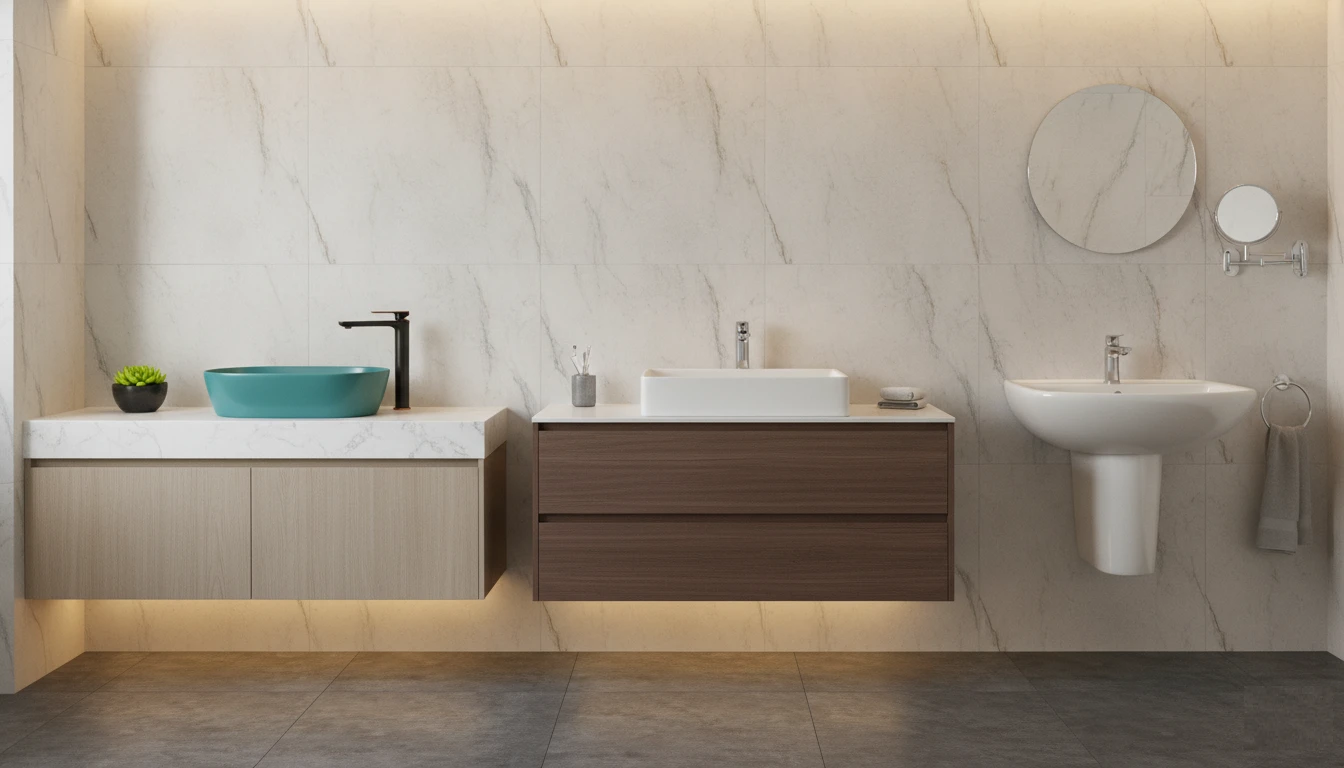
Kerovit's washbasin range covers all three formats - each manufactured at their sanitaryware facility and backed by a 10-year warranty.
- Counter Top (Art Basin): The Aurum collection's Art Basin range brings sculptural form to the counter top format. Available with PVD-finish faucets in gold, rose gold, and matte black for a fully coordinated premium specification. Each Art Basin is designed to be the visual centrepiece of the bathroom.
- Under Counter: Available in the Klassic collection, sized for standard Indian vanity depths. Designed for integration with Kerovit's bathroom furniture range for a fully coordinated vanity specification.
- Wall Mounted: Kerovit's wall mounted range includes wall bracket and wall hung options, with the half pedestal variant available for retrofit projects where in-wall pipe concealment isn't practical.
Browse Kerovit's complete washbasin collection or visit a Kerovit experience centre to compare all three formats side by side.
Frequently Asked Questions
Q: What is the difference between a counter top and an under counter wash basin?
A: Both sit within or on a vanity, but from opposite directions. A counter top basin rests on top of the surface - the full bowl is visible and elevated above the counter. An under counter basin mounts from below, so the counter flows uninterrupted with no visible rim above it. Counter top basins make a design statement; under counter basins prioritise surface utility and a seamless look.
Q: Which washbasin is best for a small bathroom in India?
A: A wall mounted washbasin is the best choice for compact bathrooms under 40 sq ft (3.7 sq m). It requires no vanity unit, keeps the floor completely clear for cleaning, and makes the space feel larger. Both counter top and under counter basins need a vanity unit, which adds depth and floor footprint.
Q: Can I install a wall mounted basin without a full bathroom renovation?
A: Yes, in most cases. A wall mounted basin connects to the existing waste connection, and the supply pipes can be covered with a half pedestal below the basin if concealment in the wall isn't feasible. The critical check is whether your wall can support the fixing bracket - essential to confirm with a contractor before purchase, particularly in high-rise apartments with lightweight partition walls.
Q: What is the standard counter height for washbasins in Indian bathrooms?
A: Standard Indian bathroom counter height is 800–850 mm (32–33 in) from floor to rim. This applies to both counter top and under counter installations. For counter top basins, the bowl adds a further 15–20 cm (6–8 in) above this height. Wall mounted basins are installed at the same target height range for ergonomic consistency.
Q: What tap works best with a counter top wash basin?
A: A wall-mounted tap is the most practical and aesthetically coherent pairing - it keeps the counter surface clear and positions the spout at the right height above the elevated bowl. Deck-mounted taps can be fitted separately through the counter surface alongside the basin, but they occupy counter space and add installation steps. For Kerovit's Art Basin range, wall-mounted Aurum faucets are the matched premium specification.
Conclusion
Counter top for the bathroom that's a design statement. Under counter for the bathroom that works hard. Wall mounted for the bathroom that's making the most of limited space. None of the three is the default right answer - the right answer is the one that fits your renovation scope, your storage needs, and your wall structure.
Kerovit's washbasin range covers all three, backed by a 10-year warranty and available across the Klassic and Aurum collections. Browse the full range or speak to a design advisor at a Kerovit experience centre to see every format in person.