
How Water Pressure Affects Your Bathroom Shower - and What to Do About It
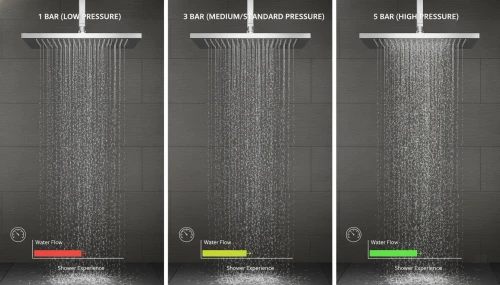
Most shower problems aren't caused by a faulty shower head. They're caused by pressure - either too little of it, or a mismatch between the shower type specified and the pressure the building actually delivers.
If your bathroom shower underperforms despite a seemingly good product, water pressure is almost certainly the first variable to investigate. This guide explains how pressure works, what's normal in Indian homes, how it affects each shower type differently, and the practical steps to fix it.
What Is Water Pressure and How Is It Measured?
Water pressure is the force that pushes water through pipes and out through your shower head. It's expressed in two units you'll encounter when researching shower products:
- Bar - the metric standard used in most Indian plumbing specifications
- PSI (pounds per square inch) - common in product datasheets; 1 bar = 14.5 PSI
The number that matters for shower performance isn't static pressure (the baseline reading in a pipe at rest) - it's dynamic pressure: the pressure while water is actively flowing. Dynamic pressure is always lower than static, and it drops further when multiple outlets run simultaneously in the same building.
How to get a practical reading at home: You don't need a gauge to get a useful reading. Collect water from your shower outlet into a bucket for 30 seconds — the litres you collect, multiplied by two, gives you yourflow rate in litres per minute (LPM). This is the easiest number for most homeowners to work with, since it needs no equipment.
Throughout this guide, shower requirements are given in bar (the industry specification standard), with an approximate LPM equivalent alongside so you can match your own bucket-test reading directly, without needing a pressure gauge.
Quick LPM Reference approximate - actual flow varies by shower head design; use as a general guide
Flow Rate (Approx.) | Recommended Dynamic Pressure | Suitable Applications |
Below 8 LPM | Below 1.0 bar | Hand shower or small overhead shower only. Not recommended for premium showering experience. |
8–15 LPM | 1.0–2.0 bar | Standard overhead showers (200–250 mm), hand showers and basic shower systems. |
15–25 LPM | 2.0–3.0 bar | Large overhead showers (250–300 mm), multi-function hand showers and premium shower systems. |
Above 25 LPM | 3.0–5.0 bar | Rain showers (300 mm+), body jets, wellness showers and luxury multi-outlet shower systems. |
Ideal Water Pressure for Indian Homes
India's municipal water supply varies significantly - not just city to city, but floor to floor within the same building.
CPHEEO (Central Public Health and Environmental Engineering Organisation) guidelines specify a minimum residual pressure of 7 metres head (23 ft) — approximately 0.7 bar, or roughly 5-6 LPM through a standard fitting — at the draw-off point. In practice, many urban buildings — particularly on upper floors, during peak morning demand, or in areas with ageing infrastructure — receive supply at or close to this minimum.
The pressure ranges that matter for bathroom planning:
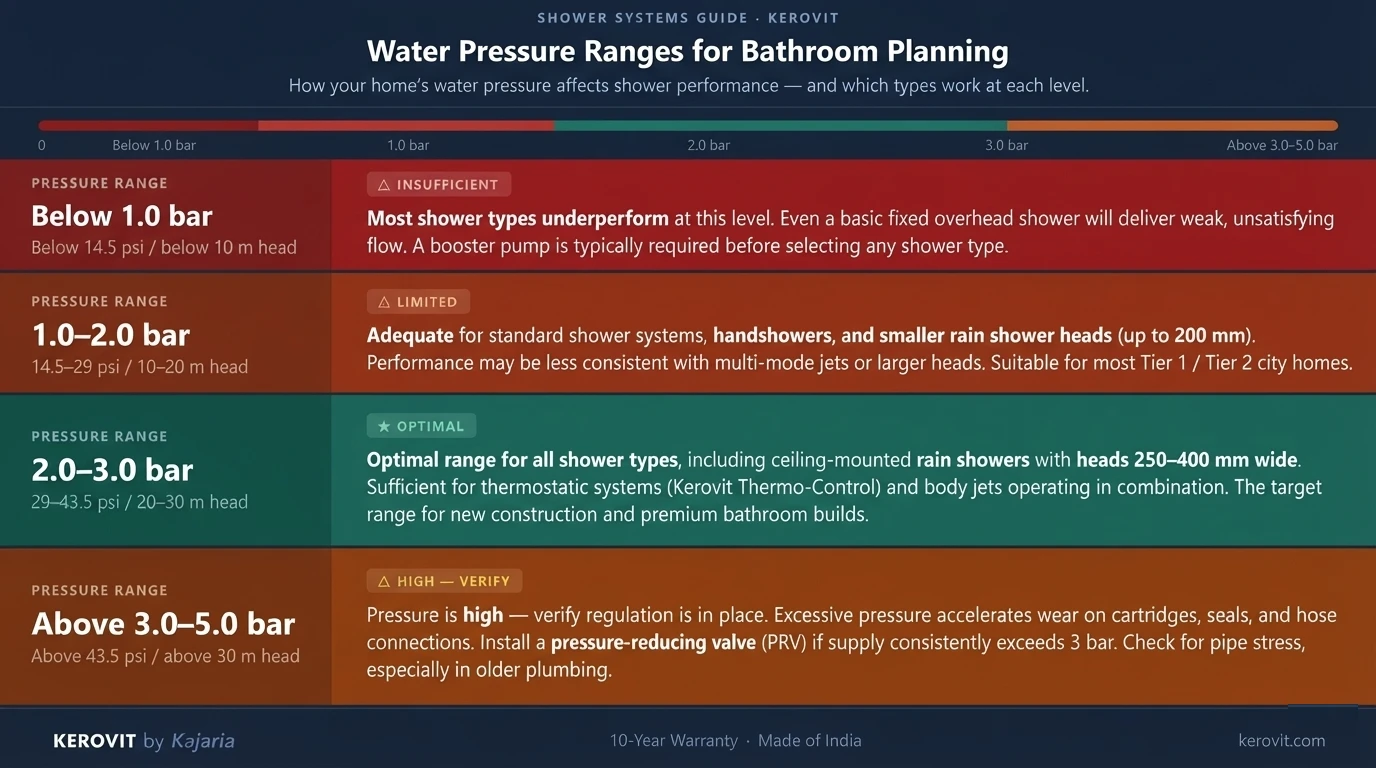
Height compounds the issue. Ground-floor apartments typically receive the best pressure. Every floor above ground loses approximately 0.1 bar due to static head loss, meaning a building receiving 2 bar at the main supply may deliver only 1 bar (roughly 8 LPM) at a 10th-floor shower.
How Low Pressure Affects Each Shower Type Differently
Not all bathroom shower types respond to low pressure in the same way. Understanding this hierarchy is the basis of any informed shower purchase.
Overhead Showers
Standard overhead showers are the most pressure-tolerant category. Most quality overhead shower heads maintain usable performance from around 1 bar (roughly 8 LPM) upward, and well-designed models use flow regulators to optimise spray pattern across a range of inputs. That said, performance at 1 bar and at 2 bar (roughly 15+ LPM) is meaningfully different - spray intensity, coverage, and the sensation of warmth distribution all improve as pressure increases.
Rain Shower Heads
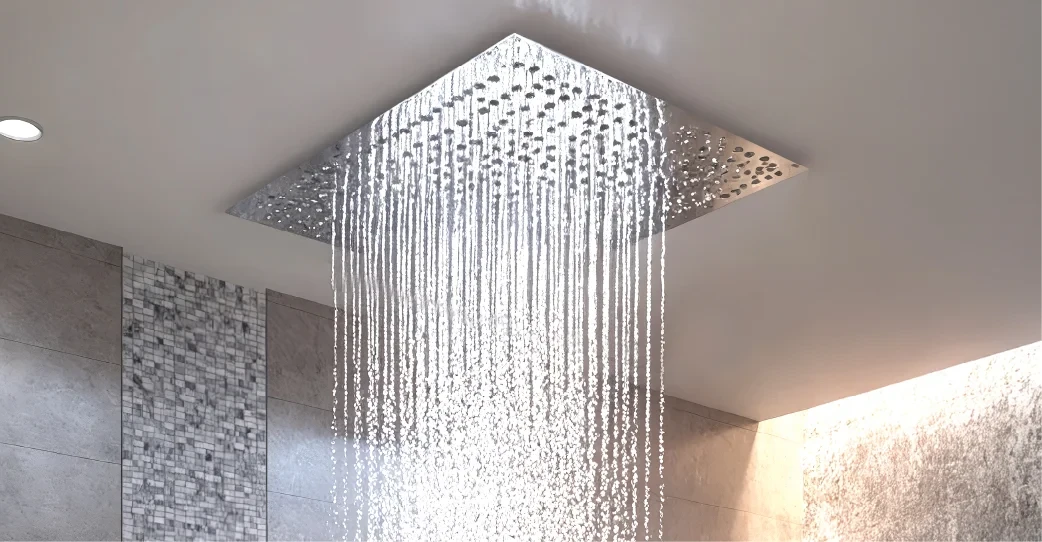
Rain shower heads are the most pressure-sensitive fitting in common bathroom use. A 300mm (12 in) ceiling rain shower head distributes water across hundreds of perforations simultaneously. At 3 bar (roughly 25+ LPM) and above, this produces the wide, even cascade it's engineered for. At 2 bar (roughly 15 LPM), only the central perforations flow freely - outer perforations trickle or stall entirely. The result is a premium fitting that performs like an average one - and a specification mistake that is expensive to correct after installation.
Handshowers
Multi-flow handshowers - those offering jet, massage, mist, and wide-spray modes - perform best at 2 bar (roughly 15 LPM) and above. The jet and massage modes are particularly pressure-dependent: they rely on concentrated force that low pressure eliminates. Single-flow handshowers are significantly more forgiving, maintaining useful performance down to around 1 bar (roughly 8 LPM).
Body Jets
Body jets have the highest pressure requirement of any common shower component. Running body jets simultaneously with an overhead or rain shower demands a combined flow rate of 25–30 litres per minute (roughly 3–4 bar) - which, in most Indian apartment buildings, requires a dedicated pressure booster pump. Without it, body jets produce a weak horizontal mist rather than the pressurised wrap-around spray that defines their purpose.
Signs Your Shower Pressure Is Too Low
Before testing pressure directly, these symptoms reliably indicate a problem worth investigating:
- Uneven spray from a rain shower head - water flows only from central perforations, leaving dry patches across the spray plate. This is the most definitive sign that a rain shower head isn't receiving adequate pressure.
- Jet and massage modes feel identical to wide spray - on a multi-flow handshower, mode differentiation requires pressure to create force variation. If all modes feel similar, pressure is the likely cause rather than the fitting itself.
- Temperature swings when another tap opens - if your shower runs cold when a toilet is flushed elsewhere in the building, your building's supply pressure is borderline. Manual valves have no mechanism to compensate for the sudden flow redistribution; the symptom is a temperature spike or drop lasting several seconds.
- Consistent underperformance across a new, correctly installed shower - if a recently installed premium shower underperforms from day one, the shower head is not the problem. Pressure should have been tested (using the bucket test above) before specification.
How to Fix Low Shower Pressure
The right fix depends on where the pressure problem originates. These are the four most effective interventions, ordered from most to least impact.
Step 1: Install a pressure booster pump
For buildings with consistently low municipal supply, a booster pump is the most reliable permanent solution. Installed on the incoming supply line or a dedicated bathroom supply branch, a residential booster pump typically delivers 2.0–4.5 bar (roughly 15–35+ LPM) at the outlet. This is the prerequisite fix for any installation involving a rain shower head or body jets. Without it, no amount of shower head upgrading will compensate for inadequate supply pressure.
Step 2: Upgrade to an aerating shower head
Aerating shower heads use air-injection technology - mixing air into the water stream at the head — to maintain the sensation of strong, full flow while using fewer litres per minute. For buildings where a booster pump isn't feasible, an aerating premium overhead shower is the most cost-effective improvement available. The pressure reading doesn't change; the perceived performance does, meaningfully. Look for this feature explicitly in shower head specifications.
Step 3: Check for and remove internal flow restrictors
Many shower heads include factory-fitted flow restrictors — small plastic inserts inside the inlet — calibrated for high-pressure installations in European or commercial buildings. In Indian homes with supply below 2 bar (roughly under 15 LPM), these restrictors reduce flow below the functional range. A plumber can remove them in minutes. Check your shower head's specification sheet or ask your supplier directly whether a restrictor is fitted before purchasing.
Step 4: Inspect supply pipework
15mm (½ in) supply pipes - standard in many older Indian apartment buildings - restrict flow capacity compared to 22mm (¾ in) or 28mm (1 in) pipes. If your bathroom was plumbed with undersized supply pipes, upgrading the shower branch line to a larger diameter can recover meaningful dynamic pressure at the outlet. Additionally, mineral scale in hard-water cities (Delhi, Jaipur, Ahmedabad) accumulates inside pipes and shower head inlets over time, progressively reducing effective bore diameter. A descaling flush or pipe inspection may restore flow without any replacement at all.
Kerovit Showers Across Pressure Ranges
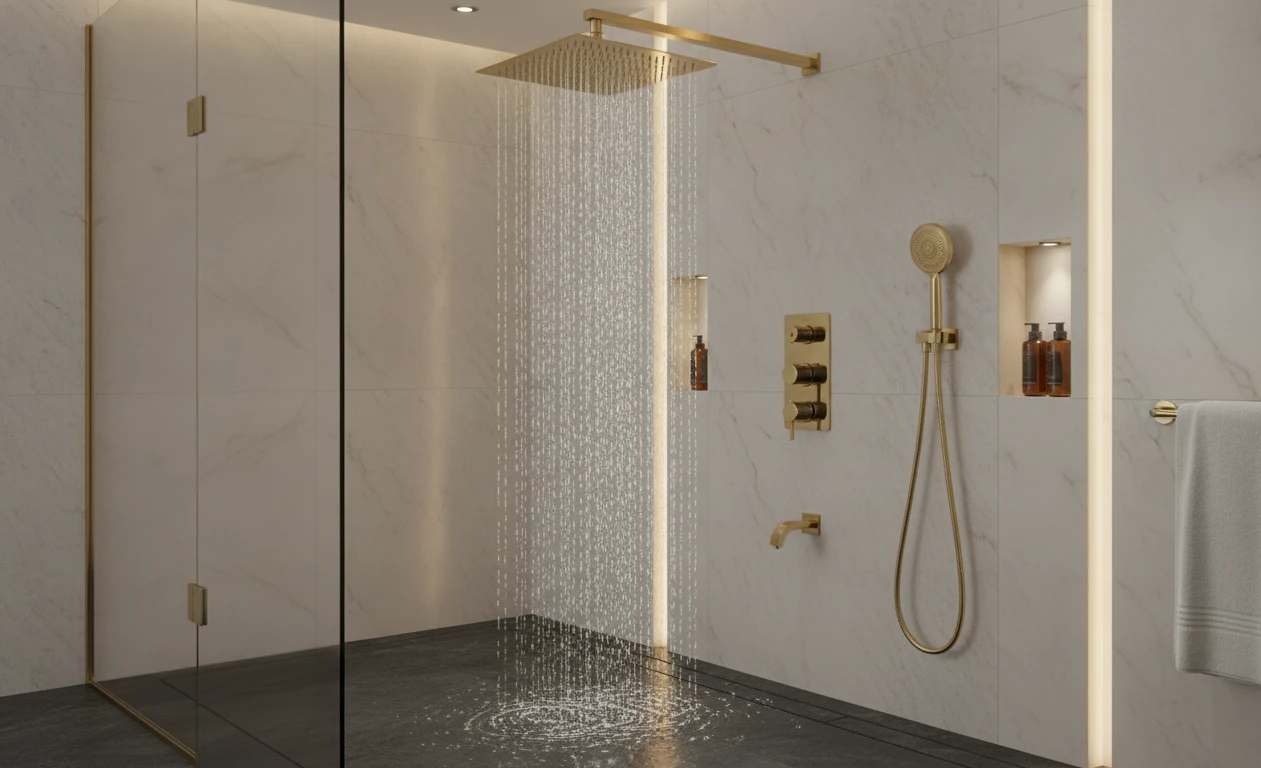
Kerovit's shower range is designed with Indian supply conditions in mind - components engineered to perform across the pressure spectrum rather than assuming ideal inputs.
For bathrooms on variable or lower municipal supply (1.0–2.0 bar, roughly 8–15 LPM), the Kerovit overhead shower range - including single-flow, multi-flow, and cascade variants - delivers reliable daily performance without a booster pump. These are the practical, pressure-realistic starting point for apartments where supply consistency cannot be guaranteed.
For bathrooms with consistent pressure above 3 bar (roughly 25+ LPM), or with a booster pump installed, the Kerovit ceiling rain shower collection delivers the full rainfall experience it's designed for. Paired with a two-outlet diverter and a Kerovit handshower, this configuration covers the complete range of daily use at the premium tier.
The Aurum PVD range brings the same pressure-matched shower components in gold, rose gold, and matte black - Physical Vapor Deposition finishes chosen for their resistance to humidity, hard water, and the oxidation that chrome develops over time in Indian bathroom conditions. Every Kerovit shower product carries a 10-year warranty.
Explore the complete Kerovit shower range, and if you're specifying thermostatic control for a multi-outlet system, the Kerovit faucet and mixer range is built to work alongside it.
Frequently Asked Questions
Q: What is the minimum water pressure needed for a rain shower head in India?
A: A rain shower head requires at least 3 bar (roughly 25 LPM) of dynamic pressure to produce an even rainfall cascade. Below this, only the central perforations activate and the spray becomes uneven. For most Indian apartments, especially on upper floors, a booster pump is necessary before specifying a ceiling rain shower
Q: How can I check water pressure at home without a gauge?
A: Collect water from the shower outlet into a bucket for 30 seconds, then double the amount to get litres per minute (LPM). Under 8 LPM indicates low pressure (roughly below 1 bar). For an exact bar reading, a pressure gauge from any plumbing supplier, threaded onto a tap, gives an accurate static measurement in under a minute.
Q: Why does my shower temperature change when someone uses another tap?
A: This is a pressure fluctuation symptom. When a second tap opens on the same supply line, flow redistributes and dynamic pressure drops at your shower outlet. A manual valve has no mechanism to compensate, so temperature changes suddenly. A thermostatic mixer valve eliminates this by maintaining your pre-set temperature regardless of pressure variations upstream.
Q: Will removing the flow restrictor from my shower head damage it?
A: Not typically. Flow restrictors are removable inserts, not structural components. Removing one increases flow rate at the cost of slightly higher water consumption. It's a reasonable step for Indian homes with supply below 2 bar (roughly under 15 LPM), but check your product warranty terms — some manufacturers note that removing the restrictor voids warranty coverage.
Q: Do handshowers need the same pressure as overhead showers?
A: Not quite. Single-flow handshowers function adequately from around 1 bar (roughly 8 LPM). Multi-flow handshowers — particularly jet and massage modes - require 2 bar (roughly 15 LPM) or above to deliver meaningful force differentiation between modes. If your pressure is below that, specify a single-flow or aerating hand shower rather than a multi-mode model that won't perform as advertised.
Conclusion
Water pressure is the variable most homeowners check last - and should check first. A mismatch between your building's supply and your shower specification is an expensive problem to fix after tiles are set and fittings are installed.
Test your pressure using the bucket method above, match your shower choice to your LPM reading, and address the supply before addressing the fitting. If you want a rain shower head, booster pump first - then specify the shower. That sequence makes the difference between a premium bathroom that performs and a premium bathroom that disappoints.
Explore Kerovit's shower range - designed for the pressure realities of Indian homes.