
Floating vs Freestanding Bathroom Vanity: Which Wins?
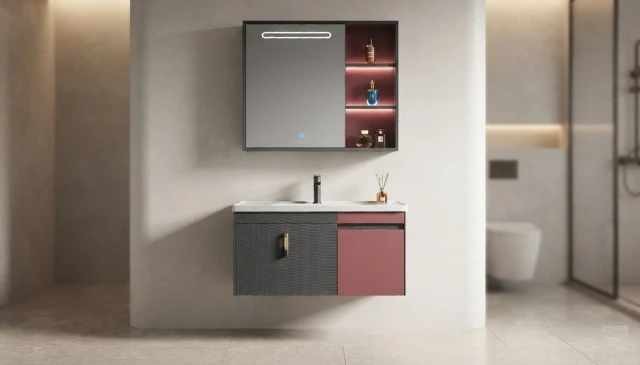
A bathroom vanity does two jobs at once it holds the basin, and it sets the tone for the whole room. Floating and freestanding units do both very differently, and in most Indian bathrooms the right pick comes down to wall type, humidity, and floor space rather than looks alone.
Here's what actually decides it.
What Is a Floating Vanity Unit?
A floating vanity mounts directly to the wall, with no legs or base touching the floor. The cabinet sits on concealed brackets, usually anchored into the wall structure behind it rather than resting on the floor for support.
The visual effect is the main draw - floor space stays open, the room reads larger, and cleaning underneath is a two-second wipe instead of a full crouch-and-scrub. It's the look most current modern bathroom vanity designs lean toward.
Simple rule: A floating vanity needs a solid masonry wall or a properly reinforced stud wall behind it. Check this before you commit to the look - a wall that can't take the load is the single biggest reason floating vanities fail early.
What Is a Freestanding Vanity Unit?
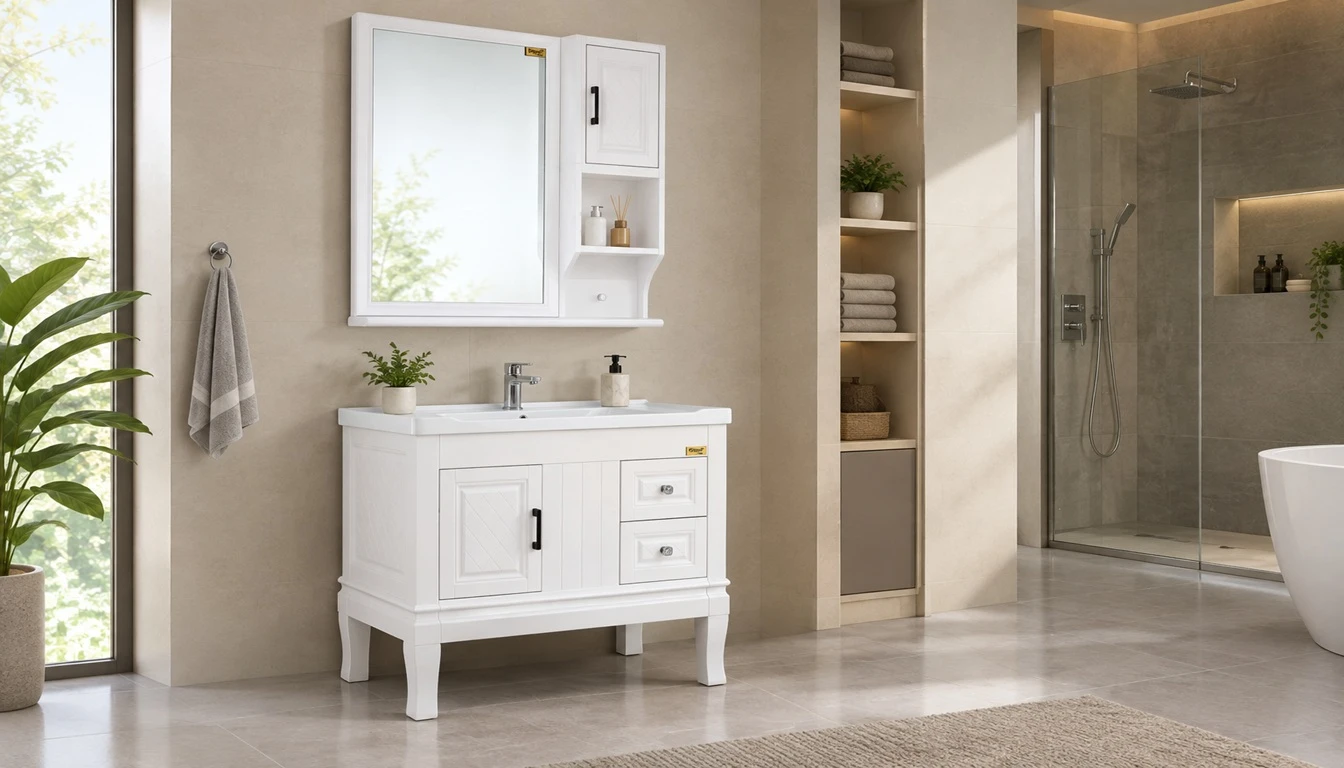
A freestanding vanity stands on its own legs or a plinth base, with the full weight resting on the floor. No wall reinforcement is needed, which makes it the easier retrofit in older homes or partition walls that can't support a hanging load.
It typically holds more internal storage than a floating unit of the same width, since the cabinet runs floor to counter instead of stopping short to leave clearance underneath. The trade-off is floor footprint - it occupies the space a floating unit gives back.
Space, Style and Storage Compared
Factor | Floating Vanity | Freestanding Vanity |
| Floor space | Opens the floor, room feels larger | Takes the full footprint |
| Storage | Slightly less internal volume | Usually more storage, floor to counter |
| Wall requirement | Needs solid or reinforced wall | No wall reinforcement needed |
| Cleaning | Easy to clean underneath | Harder to reach beneath the cabinet |
| Style | Modern, minimal | Traditional to transitional |
Neither wins outright. A floating unit wins on space and modern styling; a freestanding unit wins on storage and installation flexibility.
Best Materials for Indian Humidity
Material matters more than shape in a humid bathroom, and this is where most vanity purchases go wrong regardless of whether the unit is floating or freestanding.
WPC (wood-plastic composite) is fully waterproof and holds up best in constant-splash zones - around the basin, near a shower wall, in coastal cities where humidity barely drops. It costs more than engineered wood but needs no resealing.
BWP-grade marine plywood, built to IS 710, the BIS specification for marine plywood (most recently revised in 2024), uses boil-proof adhesive and durable hardwood veneers. It's strong enough for heavier stone or quartz counters and performs well in humid climates, provided the edges are properly sealed.
HDHMR sits between MDF and marine ply - denser and more moisture-resistant than standard MDF, though not fully waterproof. A reasonable mid-tier choice for bathrooms with decent ventilation.
MDF is the one to avoid in a high-splash or poorly ventilated bathroom. It swells when it absorbs moisture, and unlike solid wood or ply, that damage generally isn't repairable.
Simple rule: In a humid or coastal bathroom, WPC or BWP marine ply outlasts MDF by years. Check the board grade before you check the finish.
Small Bathroom vs Large Bathroom: Which Works Better Where
Small bathrooms generally suit floating vanities - the open floor beneath makes the room read bigger, and a narrower-depth unit paired with a wall-hung or under-counter basin keeps the footprint minimal without cutting storage to zero.
Larger bathrooms have room to make freestanding work in its favour - double-basin units, furniture-style cabinets with legs, and deeper counters all read as intentional rather than cramped when there's space around them.
Before choosing either, check:
- Bathroom width and floor area
- Wall type - masonry, or a stud/partition wall
- Storage needs - daily-use items vs occasional
- Ventilation and typical humidity levels
- Basin type it needs to pair with - wall-hung, counter-top, or under-counter
Common Mistakes to Avoid
- Choosing a floating vanity for a partition wall. Confirm wall type before falling for the look - retrofitting reinforcement after installation is expensive.
- Ignoring board grade for the sake of finish. A laminate finish looks the same on MDF and WPC until the humidity gets to it.
- Skipping the depth-to-width check. A vanity that leaves less than comfortable clearance to the door or shower makes the whole bathroom feel tighter, not bigger.
- Assuming ventilation doesn't matter with waterproof materials. Even WPC benefits from an exhaust fan - it protects the basin fittings and mirror, not just the cabinet.
- Choosing the vanity before the basin. Vanity depth and basin type need to match - see our under-counter vs wall-mounted washbasin guide before finalising either.
Kerovit Vanity Unit Collections
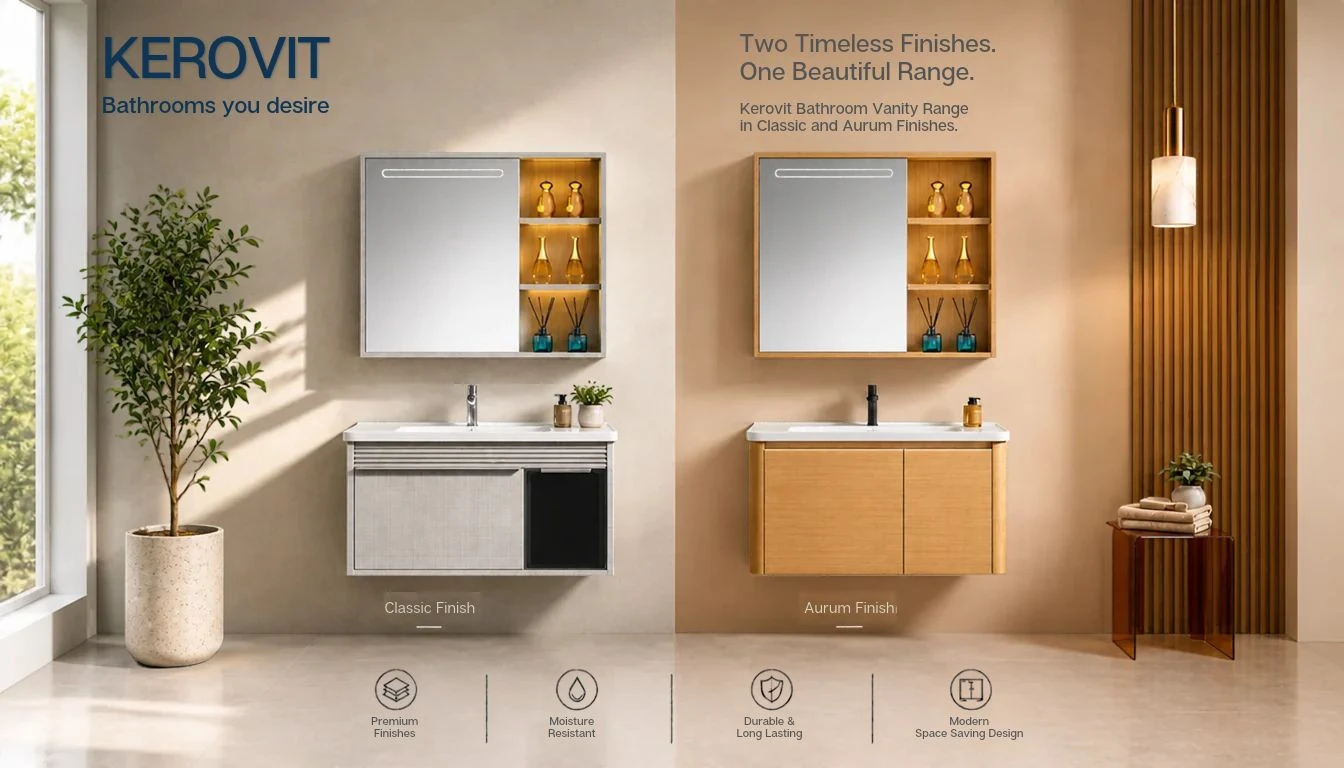
Kerovit's Klassic and Aurum ranges extend into bathroom furniture alongside sanitaryware and faucets, with finishes designed to sit alongside each collection's existing chrome and PVD hardware.
Which Vanity Should You Choose?
- Floating vanity - if the bathroom is compact, the wall is solid or reinforced, and an open, modern look matters most.
- Freestanding vanity - if you need maximum storage, the wall can't take a hanging load, or the bathroom is large enough to carry the extra footprint.
Frequently Asked Questions
Q: Can any wall support a floating vanity?
A: No. It needs solid masonry or a stud wall reinforced with blocking behind the drywall. A standard hollow partition wall generally can't take the load without extra support.
Q: Is a freestanding vanity always cheaper?
A: Not necessarily - it depends more on material and finish than on the floating vs freestanding choice itself. A basic floating unit can cost less than a premium freestanding one.
Q: Does floating vanity height matter?
A: Yes. Standard counter height runs around 80–85 cm (31.5–33.5 in) from the floor, but a floating unit can be mounted slightly higher or lower to suit the household - worth deciding before installation, since it can't be adjusted after.
Q: Is WPC better than marine plywood?
A: WPC is more waterproof; marine plywood generally holds heavier counters (like stone or quartz) better. For a constant-splash zone, WPC wins. For structural strength under a heavy top, marine ply is the stronger choice.
Q: Do floating vanities work in older Indian homes?
A: Only if the wall is solid masonry, which many older homes have. Newer apartments with drywall partitions often need a freestanding unit instead, or reinforcement added before installation.
Final Word
The style decision - floating or freestanding - matters less than it looks like it should. Wall type rules out one option before aesthetics even enter the conversation, and material grade decides whether the vanity survives its first monsoon. Settle those two first, and either style will hold up. Explore Kerovit's bathroom furniture range to see both formats across current finishes.